
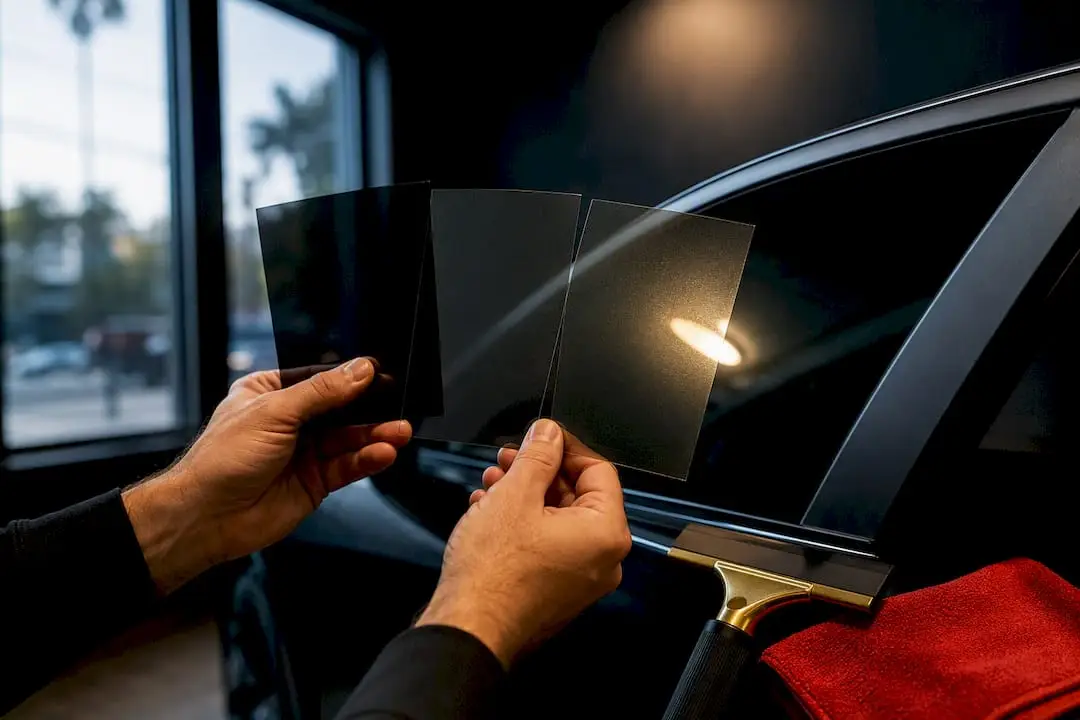
Expect to pay $150 to $900 to tint a full car in 2026, with most owners landing between $250 and $600 for a quality carbon or ceramic job. Film type drives the majority of that spread, not labor. Vehicle size, window count, and add-ons like a sunroof or old-tint removal shift the final number from there.
TL;DR:
- The cost to tint a full car in 2026 ranges from $150 to $900, with most owners paying between $250 and $600 for quality ceramic or carbon films; film type heavily influences price.
- Ceramic film offers the best long-term value for hot climates and ongoing use, especially if you drive extensively or keep the vehicle for multiple years, despite its higher upfront cost.
- SUV, minivan, and truck tinting typically costs 25 to 40 percent more than sedans due to increased glass area and added labor, with installation times extending up to several hours for larger vehicles.
- Quotes vary mainly because of film series and IRR ratings; always verify the specific film brand, warranty coverage, and included services before comparing prices.
- Adding features like full windshield coverage, sunroof tinting, or old film removal can increase the final cost by hundreds of dollars, and proper shop environment reduces issues like bubbling and peeling.
Table of Contents
- What Drives Window Tint Cost by Film Type
- How Vehicle Size and Glass Count Change the Price
- Why Do Two Shops Quote Different Prices for the Same Car?
- Add-Ons That Change Your Final Bill
- How to Get Apples-to-Apples Quotes
- What a Professional Installer Looks for in a Quality Job
- An Installer’s Honest Take on Tint Pricing
- Get a Ceramic Tint Quote from The Windows Tinting
- Sources
- FAQ
What Drives Window Tint Cost by Film Type
Film choice explains roughly 60 to 70 percent of the price gap between a budget job and a premium one, according to pricing data from TheHowMuch. Here’s what a full sedan typically runs by film family:
- Dyed film: $150 to $300. Blocks light and glare but offers weak heat rejection and fades within a few years.
- Metalized film: roughly $200 to $350. Better heat rejection than dyed, but the metal content can interfere with radio, GPS, and toll transponder signals.
- Carbon film: $250 to $450. No signal interference, solid infrared rejection, and a matte finish that doesn’t fade.
- Ceramic film: $400 to $800. Nano-ceramic particles block infrared heat without blocking signal, and clarity stays sharp for years.
- Nano-ceramic (top-tier): $500 to $1,000. The best heat rejection and UV block on the market, often exceeding 99 percent UV protection.
Statistic Callout: National data from Yelp puts the average car tint job around $195, but that figure leans heavily on basic dyed film and per-window pricing. Upgrade to ceramic and the number roughly triples.
If you drive in a hot climate or plan to keep the car five-plus years, ceramic tends to deliver the best long-term value despite the higher sticker price. Budget shoppers who just want glare control and don’t mind reapplying in a few years can get by with dyed or metalized. Anyone using GPS-based apps or toll tags regularly should skip metalized film entirely.
How Vehicle Size and Glass Count Change the Price
A two-door coupe with four windows costs less to tint than a three-row SUV with eight or more panes of glass, simply because there’s more film and more labor involved. SUVs and vans often run 25 to 40 percent higher than a comparable sedan job using the same film.
- Sedans: $150 to $700+ depending on film, per TintFinder’s 2026 cost calculator.
- SUVs and minivans: $250 to $700, driven by larger door glass and third-row windows.
- Trucks: similar to sedans for cab-only jobs, higher if the truck has extended or crew cab glass.
- EVs with panoramic glass roofs (Tesla Model Y, Model 3): expect a separate line item, since the glass roof isn’t standard tint work and requires specialized film and extra labor.
Installation time runs 45 minutes to 2 hours for a basic sedan, and 2 to 4 hours for an SUV or a vehicle with a glass roof. Curved rear windows and complex hatchback glass add time too, so a same-day appointment for a larger vehicle isn’t always guaranteed.
Why Do Two Shops Quote Different Prices for the Same Car?
The single biggest reason two quotes differ for an identical vehicle is film series, not workmanship. “Ceramic” isn’t one product. It’s a category that spans budget ceramic blends to premium series with documented infrared rejection ratings (IRR) north of 80 percent. A shop quoting $300 for “ceramic” and another quoting $700 are probably not selling the same film.
Three things to check before comparing price tags:
- Film series and IRR rating. Ask the shop to name the specific film series, not just the category. A reputable installer will tell you the IRR percentage without hesitation.
- Installation environment. A clean, climate-controlled bay reduces dust contamination, which is the leading cause of bubbling and peeling down the line.
- What’s included. Old-tint removal, warranty coverage, and any sensor recalibration should be itemized, not buried in a flat “labor” line.
Pro Tip: If a quote seems too low, ask what happens if the film bubbles or purples in year two. A shop with a real lifetime warranty will answer without flinching. A shop with a vague “one-year limited” policy usually means cheaper film.
Add-Ons That Change Your Final Bill
Windshield strips, sunroofs, and old-film removal are where quotes quietly balloon. A windshield sun strip or full windshield tint typically adds $150 to $350 to the base job, and full windshield coverage has its own legal VLT limits in most states.
- Windshield sun strip: usually $50 to $100 as a standalone add.
- Full windshield tint: $150 to $350, subject to state VLT rules for windshields specifically.
- Sunroof or panoramic roof: priced separately since it uses larger film sheets and different adhesion; expect a few hundred dollars extra on glass-roof EVs.
- Old-tint removal: often $50 to $150 depending on how brittle or bubbled the existing film is.
- ADAS recalibration: rarely needed for standard tint, but if a shop touches windshield-mounted sensors, ask whether recalibration is included or billed separately.
How to Get Apples-to-Apples Quotes
Comparing window tint cost across shops only works if you’re comparing the same film, the same darkness, and the same scope of work. Run through this before booking:
- Ask for the exact film series name, not just “ceramic” or “carbon.”
- Confirm the VLT percentage you’re getting on each window, since state law caps how dark you can legally go and that varies by state and by window position.
- Ask if old-tint removal is included or priced as an extra.
- Get the warranty terms in writing. “Lifetime warranty” should mean lifetime of ownership against bubbling, peeling, and color change. “Limited warranty” often means one to five years and may exclude fading.
- Ask where the work happens. A dusty garage bay versus a sealed, climate-controlled booth is the difference between a flawless finish and visible lint under the film.
Pro Tip: A quote that’s 40 percent below every other bid you’ve gotten almost always means older film stock, a rushed install, or no real warranty behind it. That’s a false economy once you factor in a redo two years from now.
If price gaps are small, the deciding factor should be warranty and shop reputation. If gaps are large, ask specifically what film is being used. It’s rarely a mystery once you get a straight answer.
What a Professional Installer Looks for in a Quality Job
A climate-controlled facility isn’t a marketing line, it’s a mechanical advantage. Dust and temperature swings are the leading causes of bubbling and peeling down the line, so a sealed, temperature-stable bay cuts rework dramatically compared to a standard garage install.
A real lifetime warranty should cover bubbling, peeling, and discoloration for as long as you own the vehicle, not just the first year. Ask any shop to confirm that in writing before you book.
One-hour tint services make sense for a standard sedan with four or five windows and no add-ons. Once you’re adding a windshield, a panoramic roof, or full old-tint removal on an SUV, expect the appointment to stretch closer to three or four hours. Anyone promising a one-hour turnaround on a fully loaded job is cutting a corner somewhere.

An Installer’s Honest Take on Tint Pricing
The window tint industry has trained buyers to shop by percentage darkness and forget everything else. That’s backwards. VLT is a legal and comfort choice, not a quality indicator. The number that actually predicts how your tint performs in five years is the IRR rating buried in the film’s spec sheet, and almost nobody asks for it.

Here’s where conventional advice falls short: most guides tell you to “get three quotes and pick the middle one.” That works fine when every quote describes the same product. It falls apart when one shop is quoting dyed film dressed up as “premium tint” and another is quoting genuine ceramic. Price without film-series context is a meaningless number.
If you take one thing from this, prioritize the warranty terms and the film series name over the sticker price. A $700 quote with a documented lifetime warranty and a named ceramic series is usually the better deal over a $300 quote with vague language and no paperwork. Cheap tint that needs replacing in three years costs more than quality tint installed once.
— Jake
Get a Ceramic Tint Quote from The Windows Tinting
Professional tinting services help cut out the guesswork on film series and warranty language that makes shopping for tint frustrating. High-quality installations often take place in a climate-controlled facility designed to reduce dust contamination that causes bubbling, and some installations come with lifetime warranty coverage against peeling, bubbling, and discoloration.

If you’re in a hot climate and want the best heat rejection available, nano-ceramic tinting is the strongest long-term option Thewindowstinting offers. Some providers offer a one-hour service option for standard sedans to enable quick turnaround without sacrificing installation quality. And if budget is the priority right now, the full nano-ceramic tint deal at $245 gives you premium film at an entry price point.
Request a quote today and get a straight answer on film series, VLT, and warranty coverage before you commit.
Sources
Price bands referenced above come from TheHowMuch, TintFinder, Yelp cost data, and XtremeDetailingUSA. Legal VLT limits vary by state, so confirm rules through your own state DPS or DMV page and always get a local quote, since regional labor rates shift these ranges.
- How Much Does Window Tint Cost? Honest Pricing Guide (2026) | TheHowMuch
- Window tinting standards — Texas DPS
- Window Tinting Cost Calculator (2026) | TintFinder
- Cost of Car Window Tinting – Last Updated July 2026 – Yelp
- How Much To Tint Car Windows? 2026 Cost Guide | XtremeDetailingUSA
FAQ
How much does it cost to tint all of your windows?
A full car, including front doors, rear doors, and back glass, typically runs $150 to $900 depending on film type, with most owners paying between $250 and $600 for carbon or ceramic film.
Is 20% tint legal in Florida?
Legal VLT limits vary by state and by window position, so you need to check your specific state’s rules rather than assume a percentage is universal. State DPS and DMV pages publish the exact limits for front, rear, and back glass.
Is 35% or 20% tint darker?
20% tint is darker than 35% tint. The VLT percentage tells you how much light passes through the film, so a lower number blocks more light and looks darker.
Is 5% tint legal in Texas?
Standard Texas passenger vehicle rules do not permit 5% tint on front side windows, since Texas DPS sets specific VLT minimums that are considerably lighter than 5%. Always confirm current limits with the state DPS page before choosing a darkness level, since medical exemptions and vehicle class can change what applies to you.